 020 8004 8625
 contact@dsar.ai
The Hidden DSAR Risk: Shadow IT and Unmanaged Data Sources
Unmanaged Repositories Risk Exposing Personal Data
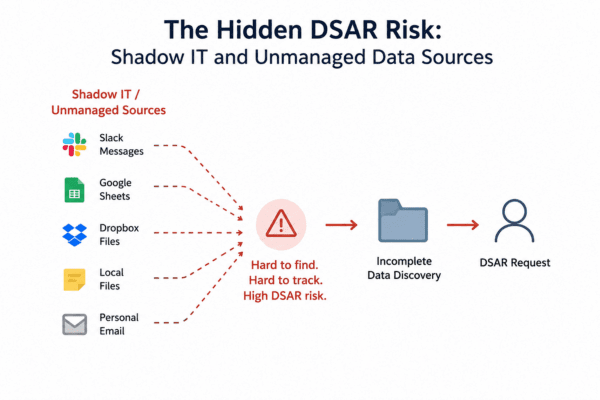
Organizations often focus their Data Subject Access Request (DSAR) efforts on approved business systems, yet shadow IT introduces significant compliance risks by creating unmanaged repositories that may contain personal data. Employees frequently adopt unauthorized applications, spreadsheets, cloud storage platforms, and collaboration tools to improve productivity, resulting in data silos that remain outside formal governance processes. These hidden data sources make it difficult for privacy teams to identify, locate, and retrieve all relevant information during a DSAR, increasing the risk of incomplete responses and regulatory scrutiny. A defensible search strategy requires continuous data discovery, inventory management, and cross-departmental collaboration to ensure that both managed and unmanaged systems are included in DSAR workflows. Organizations can reduce exposure by implementing stronger governance policies, promoting approved tools, conducting regular audits, and educating employees on the compliance implications of shadow IT.


